Integration Foundation
Chapter 38Prescribing Lifestyle Interventions in Medicine
Introduction
- Non-pharmacological interventions are critical for health promotion and primary prevention, and central to comprehensive management of chronic disease. A sustainable behavior change involves the patient doing something different in the interest of health. Helping patients implement sustainable behavior changes is an important way you can make a significant difference for patient health, and a rewarding part of your career.
- In this chapter, we outline select concepts to help you work together with your patient towards sustainable behavior change central to lifestyle interventions. Specifically, we focus on three approaches – Motivational interviewing and SMART goal setting and their utility in a stages of change framework. We will then apply these approaches to specific guidance on two common lifestyle interventions, Nutrition and Exercise.
- For more info about Prescribing Lifestyle Interventions in Medicine, helpful resources include:
- Exercise is Medicine (American College of Sports Medicine). 2019. Health Care Providers’ Action Guide.
- myactiveingredient.org: Peer-to-peer healthcare hub for physical activity and health, including inclusive and tailored resources for diverse body systems and life stages.
- Rollnick, S. et al. 2008. Motivational Interviewing in Health Care: Helping Patients Change Behavior. The Guildford Press.
Approach to Lifestyle Interventions Using Stages of Change Framework
Definition – Stages of Change (Transtheoretical Model)
The Stages of Change focus on decision-making of the individual and is a model of intentional change. This model states that at any time, for any behavior, a person is in one of the following stages of behavior change. The following table links Stages of Change, with suggestions for how to approach supporting your patient in each stage (adapted from Calgary Family Medicine Motivational Interviewing Handout)1:
Pre-Contemplation
Definition2: The patient is not intending to change their behavior in the foreseeable future (next 6 months).
Approach:
- Short (<30 seconds)
- Provide empathetic advice that is concerned, caring and evidence-based
- Leave door open to revisit at later date
- Signpost ongoing monitoring
Contemplation
Definition2: The patient has not begun to change their behavior but intends to do so within next 6 months.
Approach:
- MOTIVATIONAL INTERVIEWING
Preparation
Definition2: The patient has not begun to change their behavior but intends to do so in next 30 days (e.g. set a quit date).
Approach:
- SMART Goal Setting
- Provide resources and support as patient prepares to implement behavior change
Action
Definition2: The patient has changed their behavior recently (past 6 months) and intends to keep moving forward with behavior change.
Approach:
- Track patient’s progress
- Provide resources, support, encouragement and reward patient for their efforts.
Maintenance/Relapse Prevention
Definition2: The patient has practiced this new behavior for at least 6 months and intend to maintain the behavior change going forward. The patient is working to prevent relapse to earlier stages.
Approach:
- Provide resources, support, encouragement and reward patient for their efforts.
- Brainstorm replacement behaviors
- Identify triggers, and develop a relapse plan
It’s important to acknowledge that the stages of change are a cycle. Patients may be at any stage of the cycle during your discussion, so be sure to elicit and assess what stage they are currently at. Additionally, relapse can occur at any stage of the cycle, and can relapse to any part of the cycle. It is important to emphasize that relapse is a part of the cycle and not a failure. After relapse, patients can attempt change again, with lessons from their past attempts carried forward for future changes.
Approach 1 – Motivational Interviewing
As mentioned above, particularly for patients in the contemplative stage of change for a given behavior change, Motivational Interviewing is a critical intervention to help guide the patient towards preparation. Motivational Interviewing is “a collaborative, goal-oriented style of communication with particular attention to the language of change. It is designed to strengthen personal motivation and commitment to a specific goal by eliciting and exploring the person’s own reasons for change within an atmosphere of acceptance and compassion”3, where ultimately it is the patient who decides what to do. It is built on 5 hypotheses around the nature of change4 (see table to the right)
| Nature of change – key hypotheses4 |
|---|
| (1) Change occurs naturally |
| (2) Change is influenced by interactions between people |
| (3) Change can be affected by the expression of empathy |
| (4) The best predictor of change is confidence that the patient will change, on part of patient or practitioner |
| (5) More patients who say they are motivated to change actually do change |
Communication Styles in Motivational Interviewing5
A communication style is an attitude and approach to helping patients, a way of talking that characterizes your relationship with the patient. In patient interviews, there are 3 broad communication styles, each of which can be helpful, depending on the context of patient care. These 3 styles are as follows:
Following Style
Communication Styles – Description: Intent is to see and to understand the world through the patient’s eyes.
Example Language: “I won’t change or push you. I trust your wisdom about yourself, and I’ll let you work this out in your own time and pace”
Directing Style
Communication Styles – Description: Intent is to take for clinician to manage, and patient to be adherent/compliant. This implies an imbalance where one person (the clinician) holds knowledge/expertise/authority/power with intent to help the other person (the patient).
Example Language: “I know how you can solve this problem. I know what you should do.”
Guiding Style
Communication Styles – Description: Intent is for the patient to decide where to go, and the clinician helps the patient get there. The clinician acts as a resource who knows what is possible and offers alternatives to choose from.
Example Language: “I can help you solve this problem for yourself.”
In Motivational Interviewing, generally we use a Guiding Style, although elements of all 3 styles can be included.
Motivational Interviewing vs. Authoritative or Paternalistic (Directing) Therapeutic Style
It is helpful to differentiate a motivational interviewing versus an authoritative/paternalistic therapeutic style. Thinking back to Clinical Decision-Making Models in Practice (See Chapter 2 – Primer on Evidence-Based Practice in Clinical Skills – MF1), consider how Motivational Interviewing is a form of shared-decision making, with bilateral information flow about options, values and preferences between clinician and patient. To further contrast the spirit of motivational interviewing versus authoritative/paternalistic therapeutic styles, please see the table below:
Motivational Interviewing Therapeutic Style
- Collaboration: Partnership between patient and practitioner, joint decision making. The patient is the expert in themselves.
- Evocation: Finding reasons to change that the patient cares about, activating the patient’s own motivation
- Autonomy: It’s up to the patient to change, practitioner can only inform and advise. Meet the patient where they are.
vs.
Authoritative/Paternalistic Therapeutic Style
- Confrontation: Assumption that patient has impaired perspective, practitioner tries to persuade or coerce the patient to change
- Education: Assumption that patient lacks insight, knowledge and skills to change, and practitioner must tell patient what to do.
- Authority: Practitioner instructs patient to make changes, with little autonomy.
Communication Skills in Motivational Interviewing6
Communication skills are the ways we put communication styles into practice. In patient interviews, there are 3 broad categories of communication skills, each of which can be helpful, depending on the context of patient care. These 3 skills are as follows:
Asking
Clinician asks questions to attempt to understand the patient’s problems.
Ask where the person wants to go and get to know them a bit.
Listening
Clinician actively listens to help clarify understanding, but also reaffirm the patient’s intrinsic worth, autonomy and agency.
Listen to and respect what the person wants to do and offer help accordingly.
Informing
Clinician shares knowledge with the patient about a condition, treatment options, and recommendations.
Inform the person about options and see what makes sense to them
Principle: As clinicians engaged in motivational interviewing with patients, we should listen more than we usually do, and talk less than we usually do. What we are particularly listening for, and asking to attempt to bring out in patients, is Change Talk and Ambivalence.
Listen for Change Talk7
Change talk relates to statements of behavior change and is essential for patients towards expressions of commitment to change (i.e. moving towards preparation state of change). Listen for 6 different types of change talk in your interview, as essential threads to follow in Motivational Interviewing:
| Change Talk Category | Examples |
|---|---|
| Desire (Statements of preference for change) | I want to…; I would like to…; I wish… |
| Ability (Statements of capability to change) | I could…; I can…; I might be able to… |
| Reasons (Arguments for change) | I would probably feel better if I… |
| Need (Statements of obligation to change) | I ought to…; I have to…; I really should… |
| Commitment (Statements of likelihood of change) | I am going to…; I will…; I intend to… |
| Taking Steps (Statements about action taken) | I actually went out and…; This week I started… |
Listen for Ambivalence7
Ambivalence is a normal step on the road to change. It represents simultaneously feeling two ways about changing one’s behavior, both wanting to make a change (Change Talk) and feeling reticent to do so (Sustain Talk). Patients can get stuck in the status quo because of ambivalence. Ambivalence is most commonly expressed as “but” statements – e.g. I need to lose 10 pounds (Change Talk - Need), but I hate exercising (Sustain Talk – Desire). We help patients by working through their ambivalence and eliciting Change Talk.
Communication Strategies in Motivational Interviewing
To elicit Change Talk and Ambivalence Talk, tools that are commonly used to Ask and to Listen include DEARS, OARS, and a Readiness Ruler. This is in addition to gentle interruption and effective silence, core skills first learned in Chapter 1 – General Medical History – MF1. Each strategy and example statements are listed below:
Asking/Listening Tool 1 – DEARS8
Develop Discrepancy
Description:
- Observe inconsistencies between values and behaviors; between goals and choices; between where person is and where they want to be.
- Goal: Help patient gain insight that current behavior is not leading them towards goals, to ↑ motivation and openness to change.
Example Statements:
- Tell me some good things and some not so good things about your behavior.
- What do you feel you need to change to meet your goals?
- How will things be for you a year from now if you continue X?
- How does X fit in with your goals?
- What are the benefits of [staying the same]? What are the costs? What are the benefits of [changing]? What are the costs?
- On one hand you’re saying X, and on the other hand you’re Y, how can that be?
Express Empathy
Description:
- Empathic listening establishes a safe, open environment for examining issues, eliciting personal reasons and strategies for change. It is a learnable skill communicating respect for patients and their feelings; listens rather than tells; provides support; and gently guides the patient while respecting their agency and autonomy in facilitating change.
Example Statements:
NURSE Statements (See Ch 1 – General Medical History – MF1 and Ch 41 – Palliative Care)9
- Naming:
- It sounds like you are [frustrated, worried, sad]
- It sounds like you were anxious because you didn’t feel there was as much attention given
- Understanding:
- I can’t imagine how difficult this must be
- This helps me understand what you’re thinking
- Respecting:
- I can see you’ve really been trying to follow our instructions
- I think you’ve done a great job with this
- You have been remarkably ahead of us in everything
- Supporting:
- I will do my best to make sure you have what you need
- We are here to support you every step of the way. If there’s any way we can help you, we’ll be there.
- Exploring:
- Tell me more about…
- Could you say more about what you mean when you say…
Amplify Ambivalence
Description:
- Ambivalence to change is normal – there’s a reason why a patient hasn’t followed through on their goal. We amplify ambivalence by exploring different “sides” of issue (on one hand…on other hand…) and help a patient work through ambivalence.
Example Statements:
- How has your behavior been a problem for you? For others?
- What was your life like before you started having problems with X?
- If you keep heading down the road your on, what do you see happening?
Roll with Resistance
Description:
- Meet the patient where they are at.
- Beware “Righting Reflex” i.e. defending status quo → the more you argue for change, the harder they’ll push back to stay the same.
- Resistance is a signal to change strategies. Focus on clarifying, understanding, and an attitude of openness to new perspectives.
- Emphasize personal choice and control. Encourage patient agency and engagement to create solutions to situations as they define them
Example Statements:
- That’s okay if you don’t want to quit. It is your choice.
- Maybe you aren’t ready to quit.
- What do you want to do? How do you want to proceed?
- Where do you want to go from here?
- How about we just plant the seed for now. You can think about it for a little, and we can revisit it next week. How does that sound?
Support Self-Efficacy
Description:
- Bolster sense of patient’s self-efficacy, intrinsic motivations for change, and belief that change is possible and attainable.
- Set small, realistic goals to facilitate experiencing success. Celebrate previous successes.
- Connect with others who have had success with similar change.
Example Statements:
- It sounds like you’ve put a lot of thought into your goals.
- It sounds like you’ve made real progress. How does that make you feel?
- It sounds like you’re struggling to make these changes, but you’ve had some success making some of them.
Asking/Listening Tool 2 – OARS8
Open-Ended Questions
Description: Invite the patient to tell their story and listen attentively, non-judgmentally, with care. Open-ended questions can’t be answered with a limited response (yes/no/maybe) and help the patient explore their own thinking.
Example Statements:
- Tell me more about…
- Help me to understand…
- How can I help you with…
- What was that like for you when…
- Why do you think that happened?
- What are your views about that?
- What have you tried before to make a change?
- What do you think you should do?
- What are good things about X? Less good things about X?
- Who are the people in your life that’ll support you changing this behavior?
Affirmations
Description: Recognize specific patient strengths and behaviors that lead in direction of positive change, to build confidence in patient capacity for change and sense of self-efficacy. Acknowledge patient effort, achievement, hardship – in a way that feels genuine to you.
Example Statements:
- You’ve accomplished a lot in a short time
- I appreciate that you were willing to share that with me
- This is hard work you are doing
- Sounds like you’re dealing with a tough situation right now
- I’ve enjoyed talking with you today
- That’s a good suggestion
- You handled yourself really well in that situation
- You’ve succeeded in losing weight before. You can do it again.
Reflections
Description: Closed loop communication, offering hypothesis of meaning and stating understanding. Reflections help the patient to feel understood, can identify areas for further exploration/clarification.
Example Statements:
- It sounds like..
- It seems like…
- So you feel…
- It’s like…
- So what I hear you saying is…
Summaries
Description: Summarizing is a form of reflective listening and closed-loop communication. It is helpful at transition points in conversations e.g. to guide towards new topic, to close an encounter.
Example Statements:
- Let me see if I got this right…
- Reflect change statements the patient made (e.g. problem recognition, concerns, intent to change, optimism about change). Include ambivalence expressed (on one hand…on the other hand…).
- …Did I get that right?
Asking/Listening Tool 3 – Patient Readiness Ruler
Assessing patients’ readiness to implement change can help the clinician determine how best to support the patient where they’re at. To assess patient Readiness to change, ask (or use a number line): On a scale of 1 to 10…
- Importance: How important is it to you to make this change?
- Readiness: How ready are you to make this change?
- Confidence: How confident are you that you can make this change?
- Confidence with supports: With additional support, how confident are you that you can make this change?
- Empower the patient: Why are you not ranking yourself lower?
- E.g. Patient states confidence to quit smoking is 3/10. Ask “why is it not a 2?” Encourages patient to reflect on strengths.

Asking/Listening Tool 4 – Gentle Interruption10
Physicians are known to frequently interrupt patients, with evidence of physicians interrupting patients on average after 18 seconds during an encounter. When we interrupt patients, in Motivational Interviewing and elsewhere, one valuable tool is the EEE approach to Gentle Interruption:
- Initiate Interruption: Eye Contact; Lean In; Gentle Hand Gesture
- Excuse Yourself: Acknowledge and Apologize for the interruption
- Empathize: With the problem that is being interrupted
- Explain: Why you are interrupting – e.g. planning time use; finishing important topic; stopping to explore important cue the patient brought up.
In addition, when bringing a period of listening to a close in an interview, strategies include summarizing what you’ve heard, acknowledging the value of what you’ve heard, being honest about time limitations; and then suggesting a change in direction for the interview.
Asking/Listening Tool 5 – Effective Silence
Silence can be a powerful tool when used effectively, though it takes some practice to becoming comfortable with silence. It can allow the patient time to collect their thoughts and space to express their emotions. Examples of use of effective silence include:
- Reflective statements (e.g. a discrepancy): Allowing time for the statement to settle in and for patient to reflect
- Making decisions: Help patients reflect and come up with their own decision. Also helps stop practitioners from interrupting and making decisions for patients – within the spirit of listening more than we usually do and talking less than we usually do in a motivational interviewing approach.
- Gathering information: It’s natural for people to feel uncomfortable during silences and want to break the silence. This often allows patients to offer more information around a previous discussion or question.
It is important to learn how to use silence appropriately, however. Inappropriate use of silence can be detrimental. For example, silence at inappropriate times can lead to awkwardness when nothing more is to be added. It can also cause unnatural breaks in the conversation. Finally, there may be instances where instead of using silence, it may have been more appropriate to use other techniques, for example using empathetic statements (see NURSE Statements – above) in response to a patient’s emotional statement or visible affect change (e.g. becoming tearful, withdrawn, angry).
How to Inform in a Motivational Interviewing Framework11
An Informing communication style occurs when a clinician shares knowledge with the patient about a condition, treatment options, and recommendations – in Motivational Interviewing, we aim to inform the person about options and see what makes sense to them. The following is a general outline for how to approach this conversation in a Motivational Interviewing framework.
Note: Informing is often not the end of the conversation i.e. it can occur in between phases of listening and asking.
Invitation
Description: Ask permission to provide information and advice. This emphasizes collaboration, reinforces the patient’s autonomy and agency in their healthcare.
Example Statements:
- Would you like to know some things that other patients have found helpful?
- Would it be alright if I tell you a concern I have about this plan?
- There are several things you can do to control your blood sugar levels. Do you want to hear then, or are there other things we should discuss first?
- Would it be alright if I make a suggestion?
- Many patients in similar situations often wonder about X. Is this something you would like to discuss?
Offer Choices
Description: Support patient autonomy by offering useful choices in patient’s context, without directing patient.
Example Statements:
- Offer options, and after listing options, ask: What do you think about these possibilities?
Talk about what others do
Description: Share how information has impacted other patients, without directing the patient on what to do.
Example Statements:
- Some patients in your situation do X. I wonder what makes sense to you?
Listen for Change Commitment
Description: If the patient expresses Commitment or Taking Steps Change talk, this is important to explore and clarify
Example Statements:
- Can use Readiness Ruler here
- I look forward to working together in months ahead to see how you’re doing with these changes and help in any way I can. Is that what you will do? Is there anything I missed?
Tool 2 – SMART Goal Setting
- Introduction: One way to frame sustainable behavior changes is through SMART goal setting, which frames the goal in a purposeful way that can be revisited by the patient over time. The chosen goal should be important and resonate with the patient. It should be action-based (in control of patient, e.g. to eat more vegetables), rather than outcome-based (e.g. to lower my Hemoglobin A1c). In a Motivational Interviewing framework, it is particularly helpful as a tool for patients in the Preparation Stage of Change.
- “Goalification”12: To help a patient identify goals, a strategy is to empathetically articulate the opposite of a given complaint (i.e. instead of “I want to feel less anxious” → “I want to feel more calm”; “I want to feel less social anxiety” → “I want to participate more”; “I want to feel less depressed” → “I want to feel more joy”).
- Functional Goal Setting: What important activities would patient like to be able to do, that their disease (e.g. chronic pain) currently prevents them from doing?
- The following is one SMART Goal Setting template13:
| Step | Prompt |
|---|---|
| 1 – Choose an Important Goal | A goal that is most important for me right now is… |
| 2 – Break down goal into smaller steps to work towards | A smaller goal that I can work on first is… |
| Step 3 – SMART Goal Setting | |
| S - Specific | What am I doing? When am I going to do it? How am I going to do it? Who will support me? |
| M – Measurable | How will I track my progress? Include details – how much/many/often? |
| A – Action-Oriented | How will I meet my goal? |
| R – Realistic | Is my goal important to me? Am I excited about my goal? |
| T –Time-Sensitive | When will I start my goal? When will I plan to review my goal? |
| Step | Prompt |
| 4 – Anticipate Barriers | Things that might get in the way of achieving my goal are… My plan for dealing with things that might get in the way of achieving my goal is… |
| 5 – Enlist Support | Who can support me with my goal? How can they help me? How will I reach out? |
| 6 – Track Goal | My plan for keeping track of my goal is… |
| 7 – Plan Rewards | When I achieve my goal, I plan to reward myself by… |
Intervention 1 – Exercise
Physical activity is as powerful as most drugs in treating most chronic illnesses. Physical inactivity costs Canada 6.8 billion dollars annually. Brief advice is a cost-effective intervention you can engage in as a clinician14. It is helpful to have a longitudinal therapeutic relationship with the patient, where you can act as a support, check-in and work together with the patient on sustainable physical activity strategies over time.
Definitions
- Physical Activity (Diabetes Canada Guidelines)15: Any bodily movement produced by skeletal muscles that results in energy expenditure above resting (basal) levels. This term broadly encompasses exercise, sport and physical activities done as part of daily living, occupation, leisure and active transport.
- Exercise (DCG)15: Planned, structured physical activity, perform with intent of improving health and/or fitness.
- Light Intensity Aerobic Physical Activity (Exercise is Medicine, EIM)16: Will usually not cause adults to sweat and breath harder. Easy to have a conversation at this intensity. Walking is a typical example.
- Moderate Intensity Aerobic Physical Activity (EIM)16: Will cause adults to sweat a little and breath harder. Able to talk in short sentences, but not sing while performing activity (e.g. playground activities, skating, brisk walk, slow biking, doubles tennis, various dance forms, active home chores, gardening).
- Vigorous Intensity Aerobic Physical Activity (EIM)16: Will cause adults to sweat and be “out of breath”. Not able to talk easily during activity. (e.g. jogging, rollerblade, fast cycling, tennis, aerobic exercise class, swim laps)
- Note: 1 minute of vigorous intensity physical activity = 2 minutes of moderate intensity physical activity (e.g. you would meet current physical activity guideline recommendations if you jogged 75 minutes/week; swam laps for 30 minutes and did brisk walking for 90 minutes, etc.)
- Note: Minutes add up in a day – e.g. 2 brisk 15min walks/day = 30 minutes of brisk walks/day
- Resistance Exercise (DCG)15: Activities of brief duration involving use of weights, weight machines or resistance bands to increase muscle strength and endurance.
- Flexibility Exercise (DCG)15: Activities such as lower back or hamstring stretching that enhance the ability of joints to move through their full range of motion.
- METS (DCG)15: The ratio of a person’s working (Exercising) metabolic rate to the resting metabolic rate. One MET is equivalent to energy expended while sitting at rest.
- Sedentary Behavior (DCG)15: An “activity” involves little or no movement, energy expenditure ranging 1-1.5 METS. Examples include sitting, watching TV, working on a computer, reclining while awake, driving.
The following summarizes current recommendations around exercise in Canada, and helpful strategies you can implement in clinical practice:
Current Canadian Guidelines for Exercise (Canadian Society for Exercise Physiology)17
Early Years (0-4yo)
- Infants (<1yo): For health benefits, should be physically active several times daily – particularly through interactive floor based-play (e.g. Tummy Time; Reaching for/grasping balls or other toys; Playing/rolling on floor; Crawling around home)
- Toddlers (1-2yo) and Preschoolers (3-4yo): For health benefits, should accumulate 180 minutes of physical activity at any intensity spread throughout the day, including variety of activities in different environments, that develop movement skills, work towards 60 minutes of energetic play by 5yo. (e.g. activities getting kids moving; climbing stairs/moving around home; playing outside and exploring environment; crawling, brisk walking, running, dancing)
- Benefits: Maintain healthy body weight; improve movement skills; ↑ fitness; build healthy hearts; have fun and feel happy; develop self-confidence; ↑ learning and attention.
- Helpful Ideas: Create safe spaces for play; Play music and learn action songs together; Dress for weather and explore the outdoors; Make time for play with other kids; Get where you’re going by walking or biking.
- Handout for Patients: Being Active with Your Young Child (Exercise is Medicine)
Children (5-11yo)
- For health benefits, should accumulate at least 60 minutes of moderate- to vigorous-intensity physical activity daily, including: Vigorous-intensity activities at least 3 days/week; Activities strengthening muscle/bone at least 3 days/week
- Benefits: Improve health; do better in school; ↑ fitness; grow stronger; have fun playing with friends; feel happier; maintain healthy body weight; improve self-confidence; learn new skills.
- Helpful Ideas: Play tag – or freeze-tag; Go to playground after school; Walk/bike/roller- blade/skateboard to school; Sledding in park on weekend; “Puddle hopping” on rainy day.
- Handout for Patients: Being Active with Your Young Child (Exercise is Medicine)
Youth (12-17yo)
- For health benefits, should accumulate at least 60 minutes of moderate- to vigorous-intensity physical activity daily, including: Vigorous-intensity activities at least 3 days/week; Activities strengthening muscle/bone at least 3 days/week
- Benefits: Improve health; do better in school; ↑ fitness; grow stronger; have fun playing with friends; feel happier; maintain healthy body weight; improve self-confidence; learn new skills.
- Helpful Ideas: Walk/bike/rollerblade/skateboard to school; Go to gym on weekend; Fitness class after school; get neighbors together for game of pick-up basketball or hockey after dinner; Play a sport such as basketball, hockey, soccer, martial arts, swimming, tennis, golf, skiing, snowboarding.
- Handout for Patents: Being Active as a Teen (Exercise is Medicine)
Adults (18-64yo)
- For health benefits, should accumulate at least 150 minutes of moderate- to vigorous-intensity aerobic physical activity per week, in bouts of 10 minutes or more.
- Also recommend activities strengthening muscle/bone at least 2 days/week
- Benefits: ↓ Risk of Chronic Diseases, including Heart Disease, Stroke, Hypertension, Type 2 Diabetes, Osteoporosis, Overweight/obesity, and certain types of cancer; ↑ Fitness; ↑ Strength; ↑ mental health (morale and self-esteem); ↓ risk of premature death
- Helpful Ideas: Join weekday community running/walking group; Go for brisk walk around block after dinner; Take dance class after work; Bike/walk to work every day; Rake the lawn and offer to do the same for a neighbor; Train for/participate in run/walk for charity; Take up a favourite sport again or try a new sport; Be active with family on the weekend.
- Handout for Patients: Being Active for a Better Life (Exercise is Medicine)
Older Adults (65yo+)
- For health benefits and to improve functional abilities, should accumulate at least 150 minutes of moderate- to vigorous-intensity aerobic physical activity per week, in bouts of 10 minutes or more.
- Also recommend activities strengthening muscle/bone at least 2 days/week
- If poor mobility is a concern, should perform physical activities to ↑ balance, prevent falls
- Benefits: ↓ risk of chronic diseases; ↓ risk of premature death; maintain functional independence, mobility, bone health, and mental health; ↑ fitness; improve/maintain body wt.
- Helpful Ideas: Join community urban poling or mall-walking group; Go for brisk walk around block after lunch; Take dance class in afternoon; Take up a favourite sport again; Train for/participate in run/walk for charity; Be active with family with “active reunions”; go for nature hike on weekend; walk dog after dinner.
- Handout for Patients: Being Active as We Get Older (Exercise is Medicine)
Approach to Prescribing Exercise (Exercise is Medicine)16
Physical Activity
- Physical Activity Vital Sign13:
- On average, how many days per week do you engage in moderate to strenuous exercise (e.g. brisk walk)?
- On average, how many minutes do you engage in exercise at this level? (Y minutes/day)
- Minutes Per Week of Moderate-to-Strenuous Exercise = X days/week x Y minutes/day
- Sports: Sports position(s) played; current level of sport played (e.g. recreational, competitive, league level); and desired future sporting activity level
- Current training history: Quantity and quality of training; any recent changes to routines (e.g. training days per week, intensity, duration of training sessions)?
Why Ask: Physical activity is as powerful as most drugs in treating most chronic illnesses, where brief advice is a cost-effective intervention you can engage in as a clinician. The first step is to assess where the patient is currently at with their exercise using the Physical Activity Vital Sign questions16. For patients who participate in sports and training programs, it is helpful to know sports and positions played, currently sporting level (e.g. recreational vs. competitive), current training level and desired future sporting level. Each sport has distinct risks for musculoskeletal injuries, where the mechanism of injury can help narrow your differential diagnosis for acute musculoskeletal injury. A recent change in training can increase risk of overuse injury. This is explored further in Section 4 – Musculoskeletal Clinical Skills – MF4.
Determine Patient Readiness to Change
- Pre-contemplation
- Discuss health benefits of regular physical activity re. patient’s unique health concerns
- Individual likely not ready to receive physical activity prescription
- Contemplation
- Emphasize pros and reduce cons of being more physically active relevant to the patient
- Individual may be receptive to receiving basic guidance on becoming ↑ physical activity
- Independent (Supervised Exercise not Necessary): Write physical activity prescription. Provide info. Refer to exercise professional.
- Supervised Exercise Necessary: Refer to clinical exercise professional, cardiac rehab or physical therapy as appropriate.
- Preparation
- Independent: Write physical activity prescription. Refer to non-clinical exercise team.
- Supervised Exercise Necessary: Refer to clinical exercise professional, cardiac rehab or physical therapy as appropriate.
- Action
- Discuss relapse prevention strategies – planning ahead for challenges, getting back to activity after a lapse.
- Independent: Applaud efforts. Encourage continued exercise.
- Supervised Exercise Necessary: Encourage continued supervised exercise.
- Maintenance
- Encourage patient to spend time with people with similar healthy behaviors; continue to engage in healthy activities to cope with stress.
- Independent: Applaud efforts. Encourage continued exercise.
- Supervised Exercise Necessary: Encourage continued supervised exercise
Pre-Participation Safety Screening Guidelines
- Past Medical History: History of Cardiac disease; peripheral vascular disease (PVD); cerebrovascular disease; renal disease; Type 1 or Type 2 Diabetes Mellitus?
- Symptoms to Screen for, BOTH on exertion and at rest:
- Chest Pain/Discomfort: Associated symptoms include dyspnea, nausea/vomiting, syncope/dizziness.
- Dyspnea; Syncope/Dizziness; Palpitations or Tachycardia; Known Heart Murmur
- Heart Failure: Orthopnea, Paroxysmal Nocturnal Dyspnea, Ankle Edema
- PVD: Intermittent claudication
- Unusual Fatigue or Dyspnea with Usual Activities
- Key Ideas: (1) Symptomatic –medical clearance recommended, regardless of current participation in regular physical activity; (2) Known Cardiovascular Disease, Renal Disease or Diabetes – medical clearance recommended if not participating in regular physical activity, recommended for vigorous physical activity if currently participating in regular physical activity.
Provide an Exercise Prescription (Commitment to change)
- Exercise Prescription and Referral Tool (Exercise is Medicine Canada): Helpful format with key messages and definitions on back – Including specific interventions to reduce sedentary behavior, to increase physical activity, and to refer for exercise assessment and counseling – Blank Prescription
- Handout for Patients: Sit Less. Move More. (Exercise is Medicine)
- Patients with Comorbidities: Exercise is Medicine provides tailored Exercise Prescriptions as patient handouts for diverse medical conditions – Rx for Health Series
- Additional Resource – myactiveingredient.org: Peer-to-peer healthcare hub for physical activity and health, including inclusive and tailored resources for diverse body systems and life stages.
- Schedule Follow-up: Review exercise interventions, adjust and co-create plan together. You could consider framing your Exercise Prescription as a SMART Goal as well.
Example Exercise Prescriptions for Patients with Diabetes (Diabetes Canada Guidelines)15
Aerobic Exercise (Goal: 150 mins mod-to-vigorous intensity/week)
- Start: Walking at a comfortable pace for as little as 5-15mins at one time
- Progress: Over 12 weeks, gradually ↑ to 50 mins/session (incl. warm-up, cool-down) of brisk walking
- Alternate: Shorter exercise sessions in course of day e.g. 10 mins TID after meals, can replace single longer session of equivalent length/intensity
Resistance Exercise
- Start: Choose ~6-8 exercises targeting major muscle groups in the body. If wishing to begin resistance exercise, should receive initial instruction and periodic supervision by qualified exercise specialist to maximize benefits and minimize risk of injury, at least for initial sessions.
- Progress: Gradually ↑ resistance until you can perform 3 sets of 8-12 repetitions for each exercise, with 1-2 mins of rest between sets.
- Method: Best evidence supports strength testing with weight machines or free weights. Resistance bands may not be as effective to ↑ glycemic control but can help ↑ strength and be starting point to progress to other forms of resistance training.
Interval Exercise
- Start: Exercise performed in intervals, alternating between higher and lower intensity, can be used by participants who have difficulty sustaining continuous aerobic exercise, to ↓ total exercise duration or ↑ variety. Try alternating between 3 mins faster walking and 3 mins slower walking.
- Progress: Start with just a few intervals, progress to longer durations by adding additional intervals.
- High Intensity Interval Training (HIIT): A form of interval training, performed through shorter intervals of higher-intensity exercise (e.g. 30s-1min at near max intensity alternating with 1-3 mins of lower intensity activity), can be performed with walking/running or other modalities e.g. stationary cycling.
Other Exercise Types
- Aquatic Exercise: Similar benefits where this can help minimize barriers from conditions (e.g. osteoarthritis). It can include briskly walking in water, swimming, or classes including variety of exercises.
- Others: Other types of exercise, classes such as yoga may be appealing (e.g. for stress management).
Break Up Sedentary Time
- Avoid prolonged sitting. Try to interrupt sitting time by getting up briefly q20-30mins.
Pedometer/Accelerometer
- Encourage pts with diabetes to self monitor physical activity with pedometer (steps) or accelerometer (steps + speed). Goal: ↑ 3000 steps/d above baseline step count by 1 year, for example:
| Baseline Steps/Day | 0 months | 3 months | 6 months | 9 months |
|---|---|---|---|---|
| <5000 | + 500 | + 750 | + 750 | + 1000 |
| 5000-7499 | + 750 | + 1000 | + 1250 | |
| >7500 | +1000/2000 | + 1000 |
- Prescription:
- Please try to complete at least ____ steps/day until your next clinic visit
- Please record your step counts in your log sheets at end of each day
- Please bring your log sheets to next clinic visit, in about 3 months
Intervention 2 – Nutrition
As noted by Public Health Canada, “Healthy eating plays an important role in promoting health and helps to prevent obesity and chronic diseases such as diabetes, cardiovascular disease and some cancers. Healthy eating relates both to the choices people make about what to eat and the broader issue of food security.”18 The following section details how to take a Dietary Intake History, and to screen for Malnutrition and Food Insecurity.
Current Canadian Healthy Eating Strategy – Canada Food Guide 2019
Canadian Food Guide was revamped in 2019 and is built around 3 key elements18:
- Foundation for Healthy Eating – Evidence-based foods that improve health
- ↓ Foods, Beverages undermining healthy eating – Evidence-based foods detrimental to health
- Importance of Food Skills – Skills and knowledge needed to implement points 1 and 2, as well as allowing people to navigate the complex food environment that we live in.
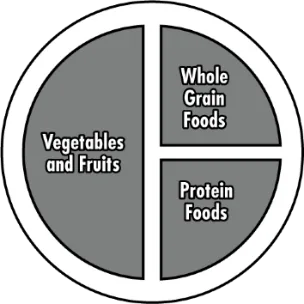
One key concept is Eat Well Plate showing recommended proportions of food types in a given meal (see picture on right). Check out resources to learn more information:
- Eat Well Plate: Examples and videos to create different meals using this format.
- Canada’s Food Guide Snapshot: 2-page Patient-facing handout that can be made available in clinic.
- Canada’s Dietary Guidelines for Health Professionals and Policy Makers: Full current guidelines.
- Diabetes Canada Basic Meal Planning: Patient-facing website with key ideas for patients with diabetes looking to make dietary behavior changes, including Diabetes-friendly recipes to try.
- Diabetes Canada Nutrition Therapy Guidelines: Full current clinical guidelines.
Approaches to Dietary History (as seen in Chapter 1 – General Medical History – MF1)
Dietary Intake History19
- Approach 1 - 24-hour intake recall: To help me to get a sense of your nutrition, could you tell me what you had to eat and drink for the entire day yesterday? Walk me through the first thing you ate and drank after waking up, to when you went to bed. It’s also helpful to know times and amounts for each.
- Approach 2 – Ask patient to describe a typical day: To help me get a sense of your nutrition, it’s helpful to know what a typical day looks like for you. Can you walk me through the first thing you typically eat and drink after waking up, to when you go to bed? It’s also helpful to know times and amounts for each.
- Approach 3 – Dietary Food Log: To help me get a complete sense of your nutrition, it’s helpful to know what your nutrition looks like over time. If you could record all food, drink and snacks over a one-week period, with quantities and times, this would be very helpful.
Malnutrition Screen (Canadian Nutrition Screening Tool)
- Have you lost weight in the past 6 months without trying to lose this weight? (negative response if lost weight but gained back)
- Have you been eating less than usual for more than a week?
Why Check: If answer to both questions YES, this ↑ malnutrition risk → Complete Subjective Global Assessment of Nutrition or refer for Nutrition Care in hospital.
The Canadian Nutrition Screening Tool is a validated questionnaire to flag patients in hospital settings who require nutrition care – Sensitivity >72.9%, Specificity 85.9%, with predictive validity for length of stay, 30-day readmission and mortality20. Note that a knowledgeable informant is able to answer these questions on behalf of a patient if the patient themselves is unable to.
Food Insecurity Screening
Quick Screen: Do you ever run out of money to buy food?
Food Insecurity Screen21: I’m going to read you two statements people have made about their food situation
- Q1: “We worried whether our food would run out before we got money to buy more.” Was that often, sometimes or never true for your household in the last 12 months?
- Q2: “The food that we bought just didn’t last and we didn’t have money to get more.” Was that often, sometimes or never true for your household in the last 12 months?
Why Ask: The Food Insecurity Screen is an evidence-based tool to identify households at risk of Food Insecurity. By screening for food insecurity, at the micro-level we can help connect the patients with resources to address this social determinant of health; at the meso- and macro-level, we can advocate for community- and systems-level change. The Food Insecurity screen is a shortened version of the 18-item Household Food Security Survey. Sensitivity and Specificity are:
| Response | Sensitivity | Specificity |
|---|---|---|
| Q1 +ve Only | 93% | 85% |
| Q2 +ve Only | 82% | 95% |
| Q1 and Q2 +ve | 78% | 96% |
Linking Stages of Change to Nutrition Behavior Change
- After taking appropriate dietary history, you can assess the patient’s Stage of Change with respect to their diet.
- If the patient is Pre-Contemplative, you can offer brief empathetic advice that is concerned, caring and evidence based, while leaving the door open to revisit later.
- If the patient is Contemplative, you can focus on Motivational Interviewing techniques.
- If the patient is in Preparation stage, you can introduce SMART Goal Setting – for example “I will pack my lunch from home for 3 days this week instead of eating at a restaurant” – other goal examples available here. You may also consider referring to a Dietitian or other supports here (e.g. for patients with comorbidities requiring tailored nutritional advice).
- If the patient is in Action or Maintenance/Relapse Prevention, you can help the patient set-up a Food Diary to help track their progress. A number of apps are available to assist with this including scanning labels on ingredients to help get sense of nutritional content for prepared meals. You can follow-up with the patient to support, track their progress, focus on additional goals for behavior change, etc.
References
-
University of Calgary. Accessed April 2, 2020. https://ucalgary.ca/codeblue/files/codeblue/mi-handout.pdf ↩
-
sphweb.bumc.bu.edu. Accessed April 2, 2020. http://sphweb.bumc.bu.edu/otlt/MPH-Modules/SB/BehavioralChangeTheories/BehavioralChangeTheories6.html ↩ ↩2 ↩3 ↩4 ↩5
-
What is MI. mioceania.org. Accessed April 2, 2020. http://www.mioceania.org/what-is-mi.html ↩
-
Lussier MT, Richard C. The motivational interview: in practice. Can Fam Physician. 2007;53:2117-2118. ↩ ↩2
-
Rollnick S, Miller WR, Butler CC. Motivational Interviewing in Health Care: Helping Patients Change Behavior. The Guildford Press; 2008:12-19. ↩
-
Rollnick S, Miller WR, Butler CC. Motivational Interviewing in Health Care: Helping Patients Change Behavior. The Guildford Press; 2008:19-21. ↩
-
Rollnick S, Miller WR, Butler CC. Motivational Interviewing in Health Care: Helping Patients Change Behavior. The Guildford Press; 2008:34-37. ↩ ↩2
-
Braastad J. Using Motivational Interviewing Techniques in SMART Recovery. SMART Recovery. 2017. Accessed April 2, 2020. http://www.smartrecovery.org/wp-content/uploads/2017/03/UsingMIinSR.pdf ↩ ↩2
-
VitalTalk. Accessed April 2, 2020. https://www.vitaltalk.org/guides/responding-to-emotion-respecting/ ↩
-
Mauksch LB. Questioning a taboo: physicians’ interruptions during interactions with patients. JAMA. 2017;317(10):1021-1022. ↩
-
Rollnick S, Miller WR, Butler CC. Motivational Interviewing in Health Care: Helping Patients Change Behavior. The Guildford Press; 2008:91-94. ↩
-
Dubord G. Cognitive behavioral therapy series: part 1. Goalification. Can Fam Physician. 2010;56:1312. ↩
-
Alberta Health Services. Accessed April 2, 2020. https://www.albertahealthservices.ca/assets/info/nutrition/if-nfs-setting-goals-lifestyle-change.pdf ↩ ↩2
-
Fremont P, et al. Exercise prescription and referral tool to facilitate brief advice to adults in primary care. Can Fam Physician. 2014;60:1120-1122. ↩
-
Diabetes Canada. Accessed April 5, 2020. https://guidelines.diabetes.ca/cpg/chapter10#sec10 ↩ ↩2 ↩3 ↩4 ↩5 ↩6 ↩7
-
Exercise is Medicine. Accessed April 2, 2020. https://www.exerciseismedicine.org/assets/page_documents/EIM%20Health%20Care%20Providers%20Action%20Guide%20clickable%20links.pdf ↩ ↩2 ↩3 ↩4 ↩5
-
Canadian Society for Exercise Physiology. Accessed April 2, 2020. http://csep.ca/CMFiles/Guidelines/CSEP_PAGuidelines_0-65plus_en.pdf ↩
-
Nutrition. Public Health Agency of Canada. Accessed April 5, 2020. https://cbpp-pcpe.phac-aspc.gc.ca/public-health-topics/nutrition/ ↩ ↩2
-
apps.medsch.ucla.edu. Accessed April 5, 2020. https://apps.medsch.ucla.edu/nutrition/dietassess.htm ↩
-
Eckert KF, Cahill LE. Malnutrition in Canadian hospitals. CMAJ. 2018;190:E1207. ↩
-
Hager, et al. Development and validity of a 2-item screen to identify families at risk for food insecurity. Pediatrics. 2010;126(1):26-32. ↩